



Some supplements will break your fast. Some won’t. And some look harmless but will quietly derail your autophagy.
If you are fasting, you are obviously already avoiding food. But many people forget to check their supplements. That is where problems can sometimes creep in.
Here is what to watch out for.
Do electrolytes break a fast?
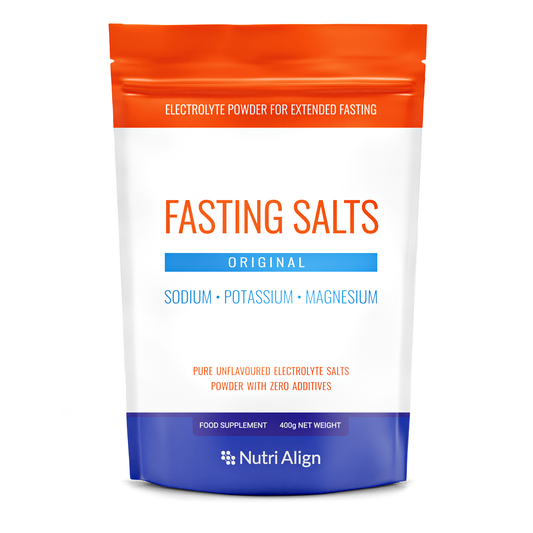
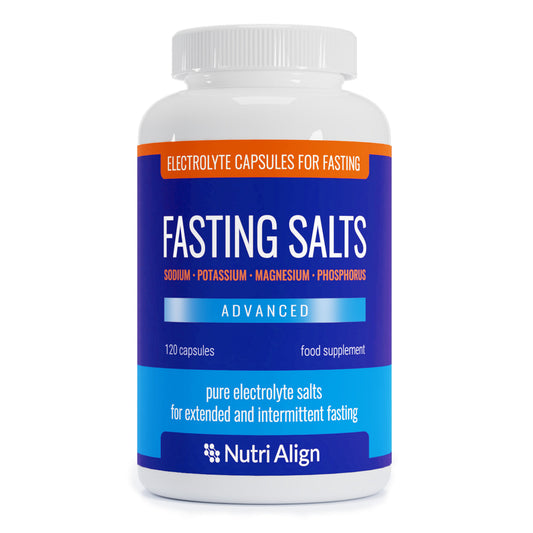
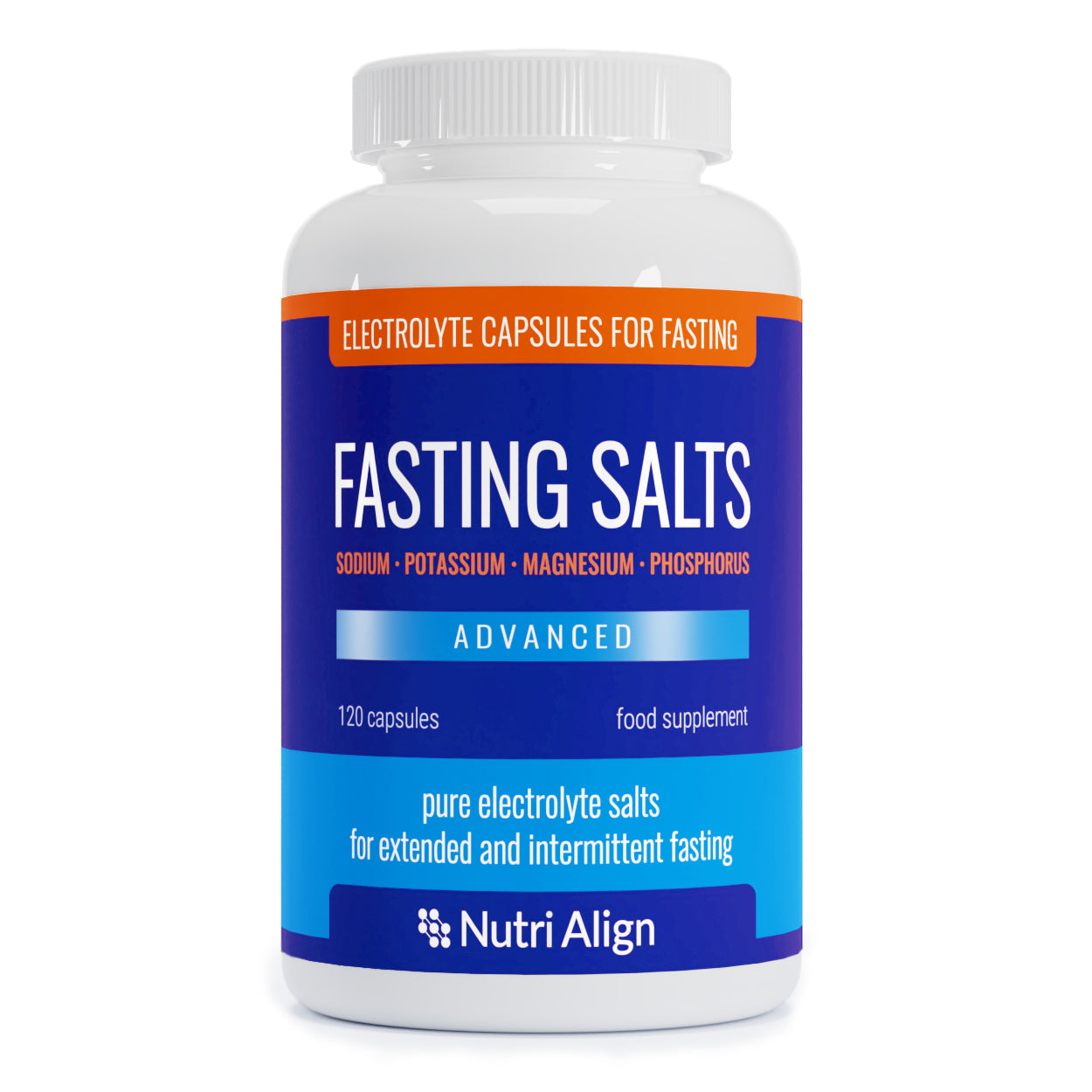
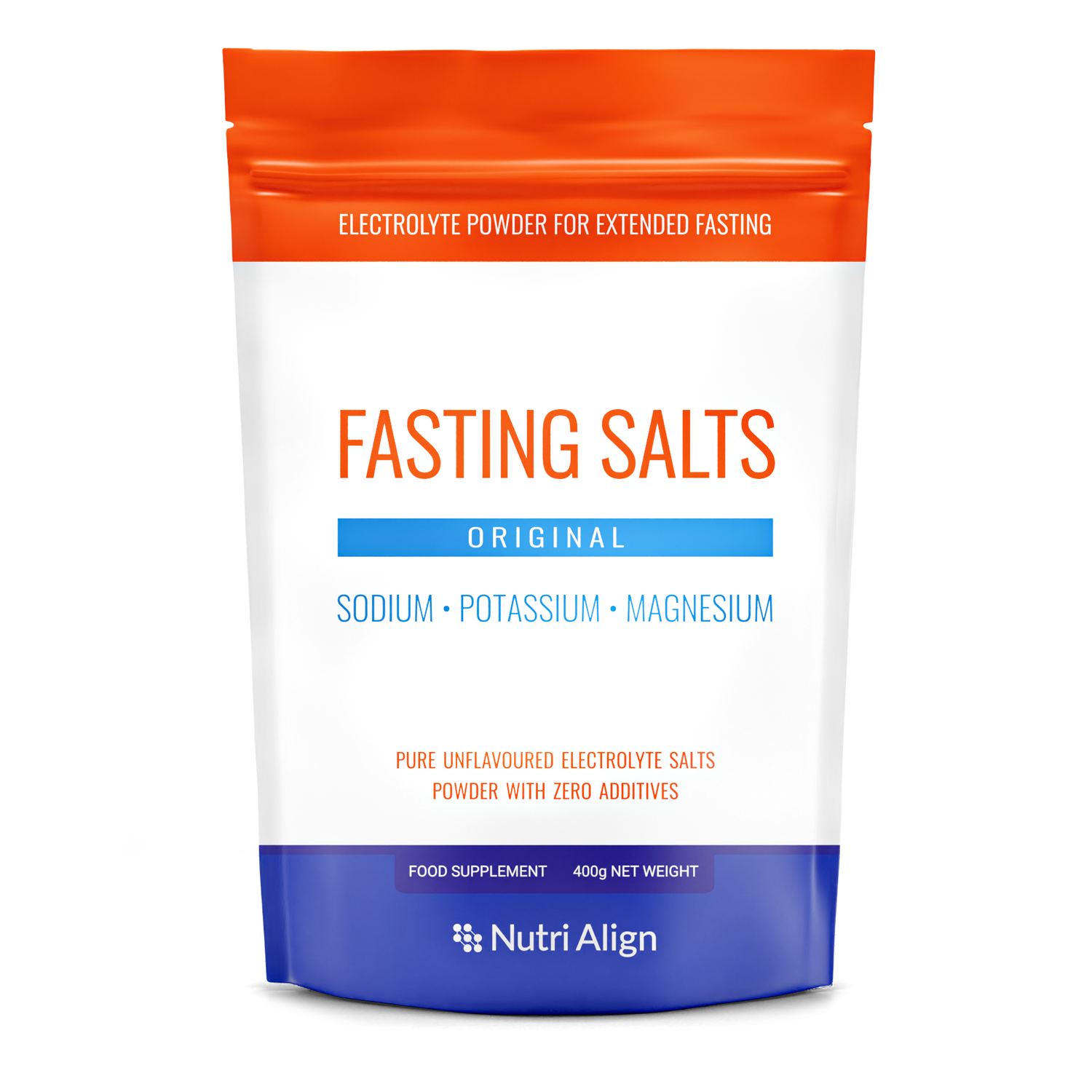
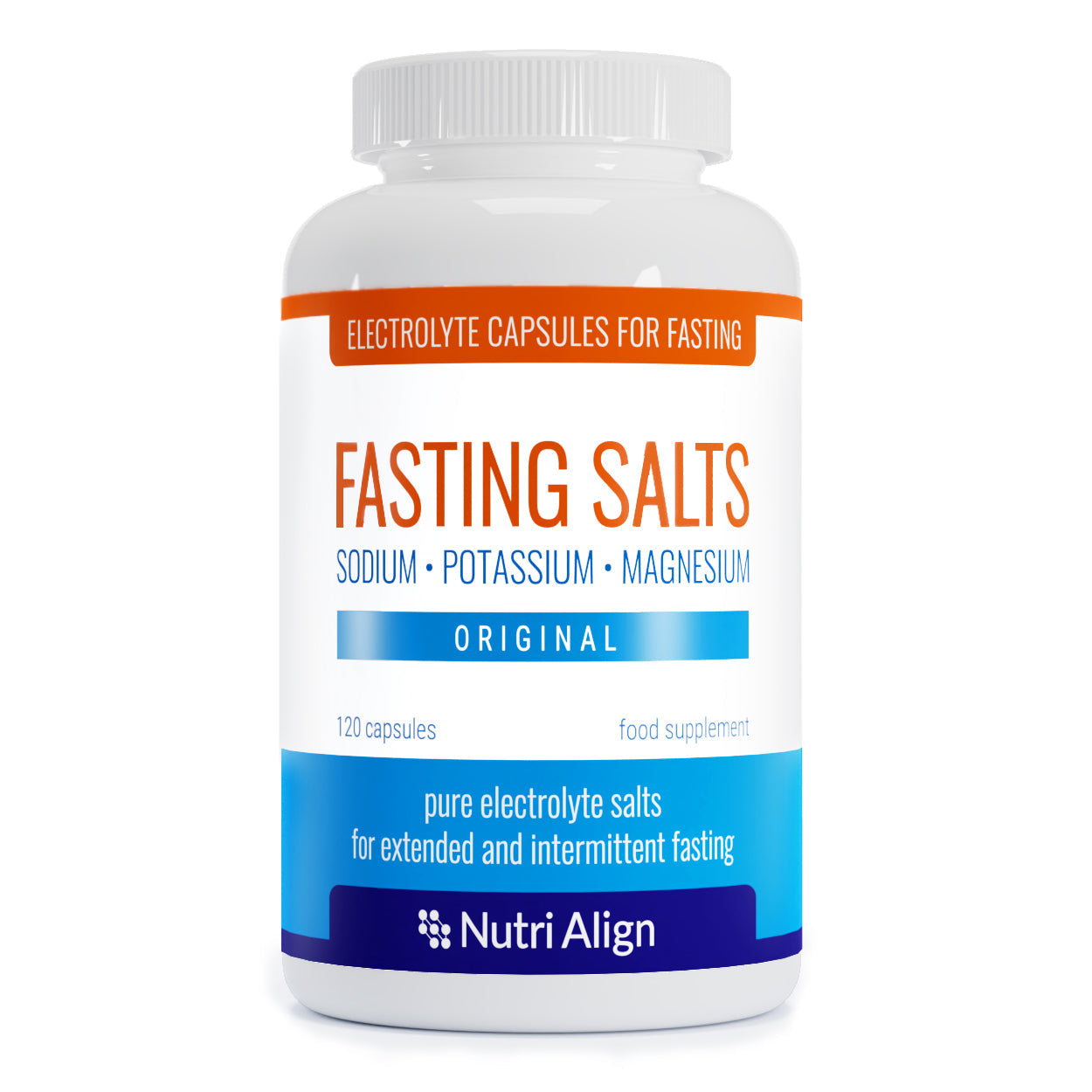
Pure unflavoured electrolytes, such as Fasting Salts, do not break a fast.
Sodium, potassium and magnesium contain no calories and no macronutrient value. They do not disrupt your fasting state in any way.
However, many electrolyte products are not pure. If they include sweeteners, flavourings, sugars or fillers, they may well break your fast.
So the real question is not just about electrolytes but what else is in the product.
Are there hidden sugars in supplements?
Unfortunately, there are many supplements out there that contain sugars. Sports electrolytes are often loaded with sugar deliberately to assist athletic recovery.
The problem is that sugar rarely appears as “sugar” on the label. It hides under different names.
Ingredients ending in “…ose” are sugars
Any ingredient ending in “…ose” is a sugar. That includes:
- sucrose
- fructose
- glucose
- galactose
- isoglucose
- dextrose
- maltose
- lactose
- levulose
- saccharose
- tagatose
- trehalose
If you see “…ose”, treat it as sugar.
Syrups are a form of sugar
Syrup is sugar in liquid form and is commonly added to supplements, especially flavoured products and gummies.
- high-fructose corn syrup
- golden syrup
- malt syrup
- maple syrup
- rice syrup
- sorghum syrup
- date syrup
- yacon syrup
Natural sugars are also still sugars
Some supplements claim they are “naturally sweetened” which sounds nice.
But in reality, this is basically still just pure sugar. It will derail your fast just as quickly as plain white sugar. This includes:
- honey
- molasses
- agave nectar
- coconut nectar
Are sugar alcohols (polyols) as bad as sugar?
Polyols are interesting. They are derived from sugar but are not fully digestible by our bodies.
So they are often marketed as “sugar-free”, but in reality none of them are 100% calorie free or carb free.
Common examples include:
- xylitol
- sorbitol
- maltitol
- isomalt
- lactitol
- mannitol
- erythritol
Erythritol has the lowest impact but most of them will affect blood sugar or insulin.
If you want a clean fast, it is safer to avoid these ingredients.
Do artificial sweeteners break a fast?
They can.
Sweeteners like aspartame or acesulfame contain no calories, but may still trigger an insulin response in some people. Even without calories, sweet taste alone can disrupt your fasting response.
For strict fasting, it is best to avoid anything that tastes sweet.
Does maltodextrin break a fast?
Yes. Maltodextrin is often used as a filler in supplements and powdered sweeteners.
It is not technically a sugar which is why it can be present in “sugar-free” products.
But in the body, it behaves very similarly to real sugar. It converts to glucose quickly and will spike blood sugar.
If you see maltodextrin on the label, treat it as a red flag!
Do flavourings break a fast?
They can. Flavourings often come with carriers or trace compounds that may interfere with your fasting state.
Simple rule: if it tastes like something, it is usually doing something.
Do gummies break a fast?
Yes. Gummies are essentially sweets with added vitamins.
Most contain sugar, syrups or sweeteners.
They will break your fast.
Do protein and collagen supplements break a fast?
Yes. They contain calories, even if all calories come from protein.
They will break a fast.
Save them for your eating window.
Does fish oil break a fast?
Technically, yes.
Fish oil contains fat, which means calories.
In practice, the effect is likely small due to the low dose.
Whether to take it during a fast depends on how strict you want to be.
What supplements can you take while fasting?
Electrolytes are strongly recommended for fasting, and absolutely essential for longer fasts. They are safe for fasting as long as they are unflavoured and unsweetened.
With regards to other supplements, just always check that they are:
- unflavoured
- unsweetened
- calorie-free
Everything else deserves a closer look.
Do all common supplement additives break a fast?
Not all additives are a problem.
Many supplements capsules contain small amounts of inactive ingredients used to bind, stabilise or encapsulate the product.
Many of these are calorie-free and do not affect your fasting state.
Common fasting-safe additive ingredients:
- calcium carbonate (mineral compound)
- dicalcium phosphate (mineral compound)
- silicon dioxide (mineral compound)
- microcrystalline cellulose (non-digestible plant fibre)
- HPMC capsule shells (non-digestible plant cellulose)
- stearic acid (fatty acid, negligible calories)
- magnesium stearate (fatty acid salt, negligible calories)
Final thought
Hidden sugars and additives are one of the easiest ways to accidentally break a fast.
Stay vigilant, read labels carefully, and keep your supplements as clean and simple as possible.