



Most fasting advice tells you to "drink plenty of water." That sounds obvious and harmless. But it's incomplete and may even be detrimental in some cases.
Fasting changes how your body manages fluids in a fundamental way. The real challenge isn't just how much water you drink. But keeping water and electrolytes in the right balance.
Get that ratio wrong in either direction and you'll feel awful. And the fix isn't always "more electrolytes." Sometimes it's less water.
This guide explains how to spot when your balance is off and how to correct it.
Why Does Fasting Change Your Hydration Needs?
Normally, food provides roughly 20–30% of your daily water intake. Fruit, vegetables, soups and even bread carry significant moisture. The moment you stop eating, that intake disappears.
There's a second, less obvious shift.
In the first 24–48 hours of a fast, your body burns through its glycogen stores. Each gram of glycogen is bound to roughly 3 grams of water. As it's released, stored sodium goes with it.
That's why most people drop 1–2kg in the first day of fasting. Almost all of it is water and minerals, not fat.
The result is that your fluid and electrolyte levels change very rapidly. Your body's usual signals can become unreliable.
And you will most likely need to adjust your water intake, compared to your usual drinking amounts when not fasting.
What Happens If You Drink Too Little During Your Fast?
The underlying cause of most dehydration symptoms is reduced blood volume.
Your blood plasma is about 90% water, so when total body water drops, plasma volume drops with it. Lower blood volume means less circulation reaching your brain, muscles and skin.
That's why a single problem (too little water) shows up as so many different symptoms.
The classic warning signs are:
- Headaches and dizziness
- Fatigue and brain fog
- Dry mouth and thirst
- Dark yellow or amber urine
- Muscle cramps
- Light-headedness when standing up
Left unchecked, dehydration can affect blood pressure, heart rate and concentration.
For many fasters, mild dehydration is a common reason a fast starts to feel unsustainable.
Can You Actually Drink Too Much Water While Fasting?
Yes, and this is where many fasters go wrong. Drinking more is not always better.
Drinking large volumes of plain water without replacing minerals dilutes the sodium in your blood. The medical term is hyponatremia. It can range from mildly unpleasant to genuinely serious.
Fasting makes you more vulnerable for two reasons.
First, you're not getting any sodium from food.
Second, the glycogen breakdown in early fasting flushes additional sodium out. If you then drink litres of plain water on top, sodium levels can drop quickly. This leads to unpleasant deficiency symptoms which will make your fast much harder to stick to.
In severe cases, hyponatremia can cause confusion, seizures and brain swelling. There are documented hospital cases of people developing acute hyponatremia after fasting without proper electrolyte support, and then drinking large amounts of plain water.
While the full-on hyponatremia is rare, overhydration with its milder symptoms are not uncommon, especially during Extended Fasting.
And here's the part most fasting guides miss: if you're already taking electrolyte supplements and still feel rough, the answer may be to drink less water rather than take more salts.
Why Do Dehydration and Overhydration Feel the Same?
The tricky aspect is that the early symptoms of dehydration and overhydration are almost identical:
- Headache
- Nausea
- Fatigue
- Brain fog
- Muscle weakness or cramping
Because the symptoms overlap, people who feel unwell often reach for more water. If the underlying issue is overhydration, that response makes things worse.
Both states are really the same underlying problem. Your water-to-electrolyte ratio is off. Just in opposite directions.
How Can You Tell Which One You Have?
Two quick checks will point you in the right direction.
Check your urine colour
Pale straw yellow is the goal. Dark amber suggests you need more fluids. Completely clear urine combined with very frequent urination can be a sign you're overdoing water and flushing minerals out.
Check your electrolyte intake
If you've been drinking water all day with no added sodium, potassium or magnesium, your symptoms are far more likely to be overhydration than dehydration. In that case, drinking more water will not help. Adding electrolytes will.
A useful rule of thumb: if you're well-hydrated on paper but still feel terrible, suspect minerals before you suspect water.
How Much Water Should You Drink While Fasting?
There is no single number that fits everyone. Aiming for a fixed target is part of how people get into trouble.
Body size, climate, activity level and fasting protocol all affect your needs. So does your electrolyte intake. A higher salt dose needs more water to stay balanced, a lower dose needs less.
That said, most adults end up somewhere between 2 and 3 litres of fluid per day during a fast, adjusted up in hot weather or with exercise. Treat that as a rough range, not a goal.
A few practical pointers:
- Sip throughout the day rather than drinking large volumes in one go
- Avoid drinking more than around 1 litre in a single hour
- Increase intake if you're sweating, exercising or in a warm environment
- Reduce intake if you're sedentary and indoors in cool conditions
- If you're taking a higher electrolyte dose, you'll naturally need more water to keep the ratio balanced
Simple General Rules for Optimal Fasting Hydration
Drink to thirst, not to a target.
Pair your water with electrolytes.
Aim for a gradual consistent intake of both throughout the day.
Avoid large amounts of water or large doses of salts in one go.
If you take just one thing from this article, make it this: water and electrolytes work together. Water alone, in large amounts, can be as much of a problem as not drinking enough.
Frequently Asked Questions about Water Fasting
Does drinking water break a fast?
No. Plain water has no calories and does not raise insulin. It will not break a fast of any kind.
Can I drink sparkling or mineral water while fasting?
Yes. Both are fine, provided they contain no added sugars or sweeteners. Mineral water can also contribute small amounts of useful minerals. See our full guide to fasting-safe drinks.
Can I add flavourings to water?
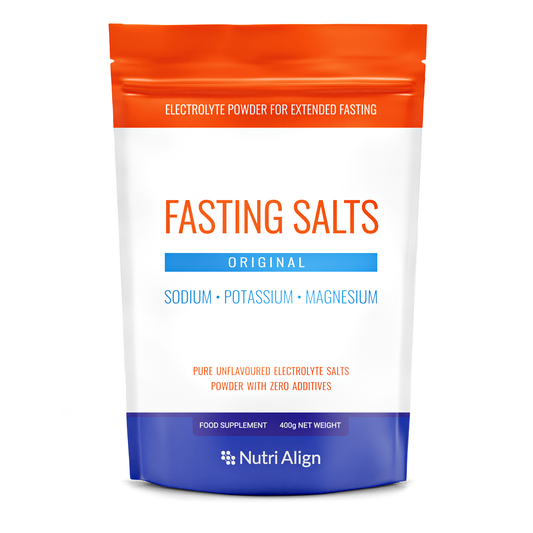
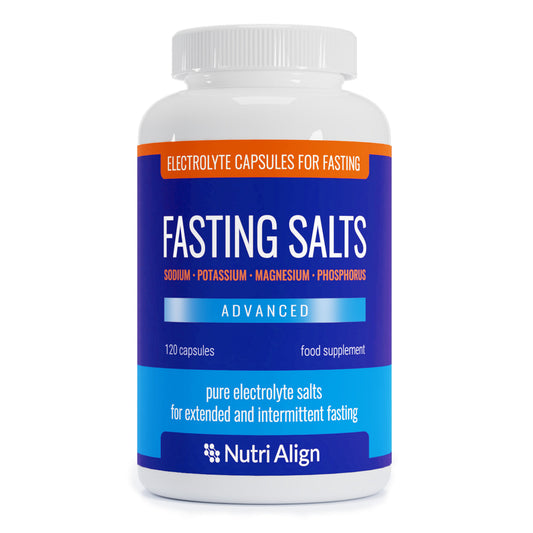
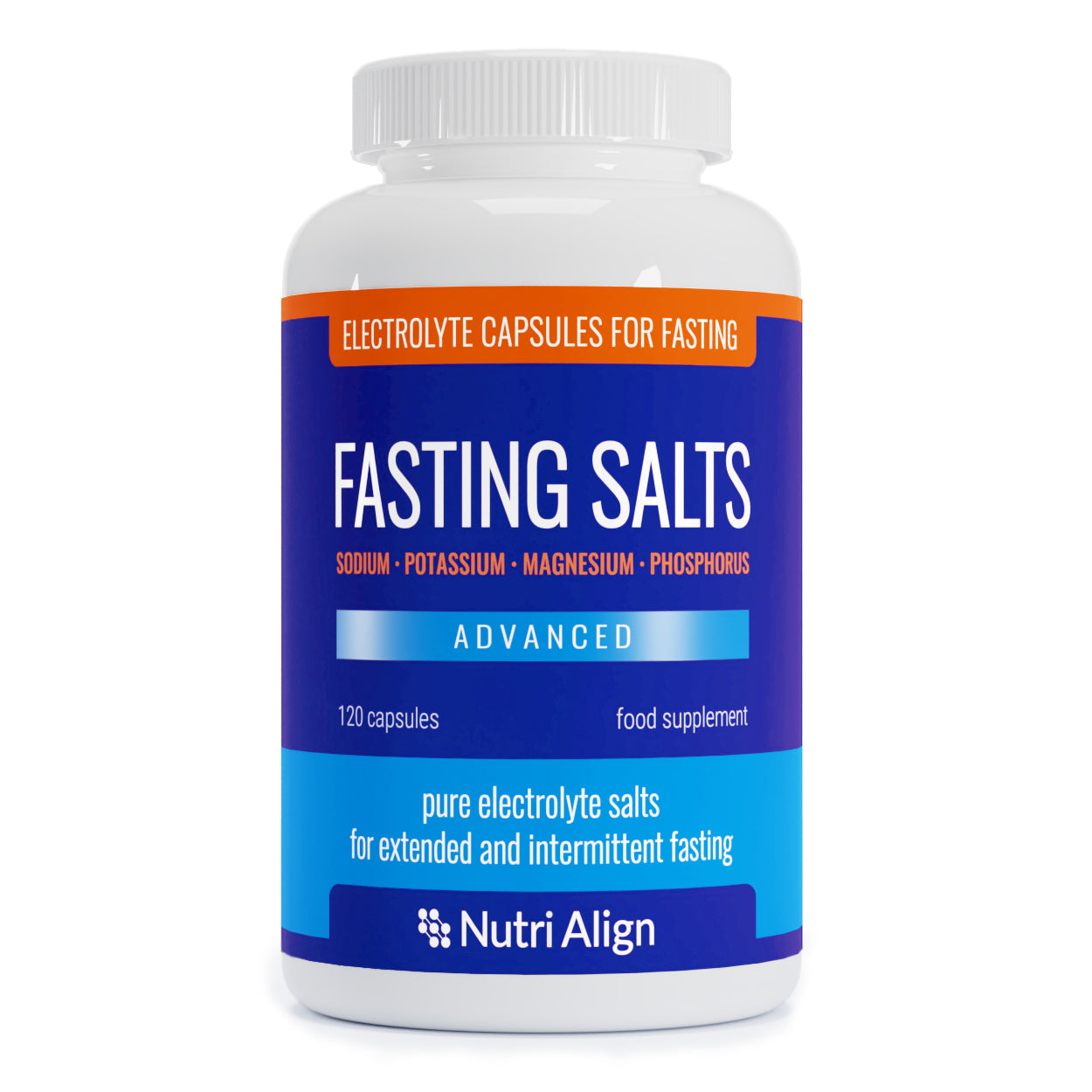
A small splash of lemon or lime juice, or Apple Cider Vinegar, has negligible calories and will not break your fast. But beware of any cordials, syrups or artificial flavourings - these can potentially break your fast. This also applies to electrolyte powders. Unsweetened and unflavoured products, like our Fasting Salts, are the safest and optimal choice for fasting.
How do I know if I'm getting enough electrolytes?
The clearest signs are stable energy, no muscle cramps, no persistent headaches and no dizziness when standing up. If any of those appear, electrolytes are usually the first thing to adjust. Try our Fasting Salts Dosage Calculator if unsure.