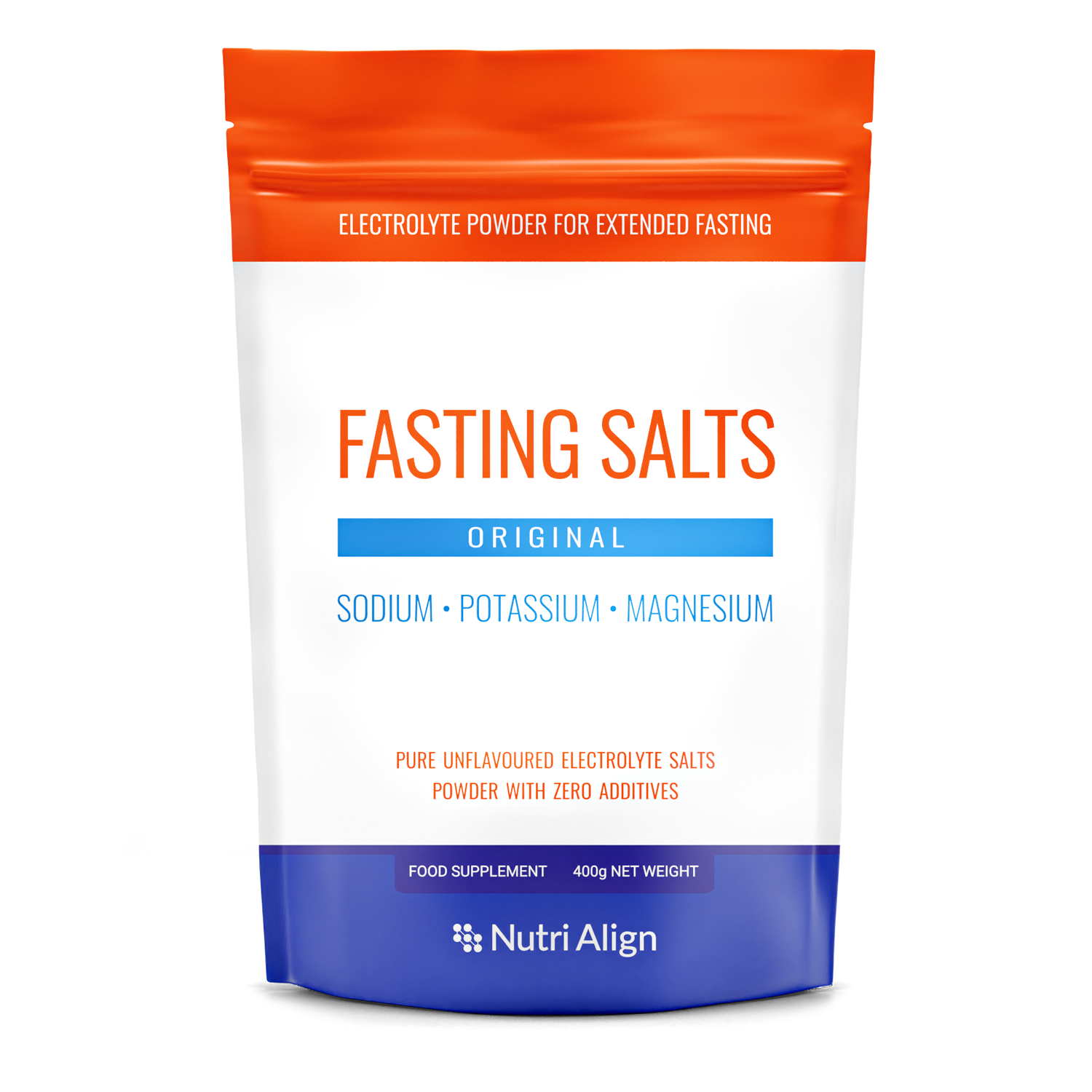


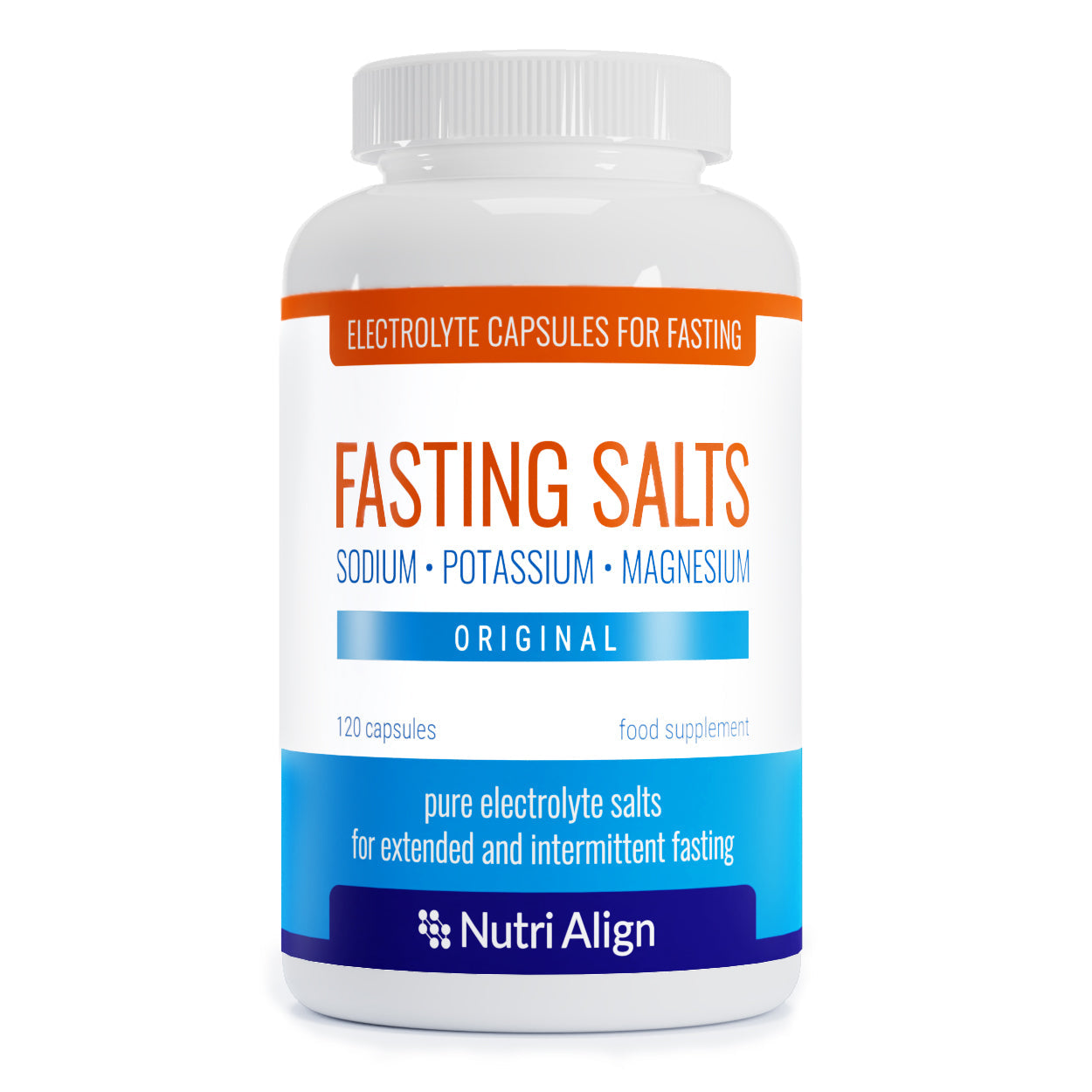


Celtic salt with lemon is a popular DIY electrolyte drink for fasting.
The concept sounds reasonable. Salt provides electrolytes. Celtic salt in particular also contains trace minerals. Lemon adds some extra potassium and makes salty water easier to drink.
But does this mix provide enough electrolyte support for fasting?
Before we proceed, let's acknowledge the obvious. We manufacture fasting electrolyte supplements, so we are not exactly unbiased!
So instead of asking you to take our word for it, let's look at the facts.
What does Celtic salt actually contain? And is Celtic salt with lemon enough to replace the electrolytes lost during a fast?
If you don’t have the time to read the full article, here’s the short answer.
Celtic salt is a good source of sodium and a decent source of magnesium. But it provides very little potassium. Adding lemon juice doesn’t meaningfully improve the potassium content.
Celtic salt and lemon combo may be sufficient for intermittent fasting and short-term extended fasting. But for longer-term fasts, you will definitely need a great deal more potassium.
Please also be aware of possible issues with heavy metals and active mineral levels in non-trademarked Celtic salt brands.
Read on to see all the facts and studies that this short answer is based on.
What does Celtic salt actually provide?
Celtic salt is an unrefined sea salt. As is the case with almost all salts, its main components are sodium and chloride.
Unlike standard table salt, Celtic salt is not refined. So it also contains many other naturally occurring minerals. This is often presented as a key advantage over ordinary table salt.
It does contain magnesium and potassium - the other two minerals from the “Big Three” fasting electrolytes group (Sodium, Potassium, Magnesium). But are the quantities sufficient for fasting?
Here’s an example from Celtic Sea Salt® which is the most popular brand.
Their current testing shows its Light Grey Celtic® salt contains around 29 to 34% sodium.
Magnesium is typically around 0.7 to 1.4%, while potassium is around 0.27 to 0.54%. These are tiny amounts that are much lower than the salt’s sodium content.
So Celtic Sea Salt is primarily a source of sodium and chloride, not a balanced source of all the main fasting electrolytes.
Does adding lemon solve the problem?
Not really. Lemon juice contains some potassium and magnesium, but the quantities are tiny.
Raw lemon juice provides about 103mg potassium and 6mg magnesium per 100g. A squeeze in a glass of water (10-15g) therefore contributes very little.
There is nothing wrong with adding lemon if it fits your fasting protocol. It can certainly make salty water more pleasant to drink!
But lemon does not turn Celtic salt into a complete electrolyte formula.
Why fasting changes your electrolyte balance
Normally, most of our electrolytes come from food. When you stop eating, that supply stops. At the same time, fasting changes the way the kidneys handle water and electrolytes.
Research has shown increased sodium loss during the early stages of fasting, a process known as the natriuresis of fasting.
One human study found that sodium excretion started rising on the second day of fasting and peaked around day four.
Potassium losses also occur during prolonged fasting. Research found that kidney potassium losses were particularly high during the first few weeks, although the body gradually became better at conserving potassium.
Magnesium is a bit more complicated because the kidneys can reduce magnesium loss when intake falls. However, studies of prolonged fasting have also found continued magnesium excretion and gradual depletion over time.
Is Celtic salt for fasting enough for short fasts?
Quite possibly.
If you practise 16:8 intermittent fasting, OMAD or an occasional day-long fast, you are still eating regularly.
Your meals can provide potassium and magnesium between fasting periods.
Some people therefore need very little extra electrolyte support. Others notice headaches, fatigue or dizziness unless they add more sodium.
If Celtic salt for fasting works well for you and you feel completely normal throughout your fast, there may be no reason to make things more complicated.
The situation changes with extended fasting.
Once you go for several days without food, there is no dietary intake of potassium or magnesium while your body is still losing electrolytes.
This is where relying exclusively on Celtic Salt becomes harder.
Electrolyte deficiency symptoms during fasting
Electrolyte deficiency symptoms are common during fasting, but not always easy to interpret. The symptoms often overlap, making it difficult to identify which mineral is running low.
Common deficiency symptoms for all three minerals
-
fatigue
-
muscle weakness
-
muscle cramps
Sodium deficiency
-
headaches
-
nausea
-
dizziness
-
confusion
Potassium deficiency
-
constipation
-
heart palpitations
-
irregular heartbeat
Magnesium deficiency
-
muscle twitching
-
tremors
-
tingling or numbness
Severe electrolyte imbalances can cause serious complications, including seizures, dangerous heart rhythm disturbances and loss of consciousness.
If you feel significantly unwell during a fast, don't simply assume you need more electrolytes. Stop fasting and seek medical advice.
Celtic Sea Salt® versus other "Celtic" salts
There is another important point that many people miss.
Celtic Sea Salt® is a trademarked brand, owned by Celtic Ocean International. It is not simply the name of every grey or mineral-rich sea salt on the market. The US trademark for CELTIC SEA SALT is registered to the company, and the owner has taken action over third-party use of similar names.
Yet online and on social media, the words "Celtic salt" are often used much more loosely. You may see other grey sea salts, French sea salts or Celtic-style salts discussed under the same general label.
Why does this matter? One important reason is quality testing.
The Celtic Sea Salt® brand says that every production lot is independently tested. Its testing includes:
-
Mineral composition
-
Heavy metals including lead, arsenic, cadmium and mercury
-
Microbiological safety
-
Other quality indicators
The company also publishes recent Certificates of Analysis and summary testing data.
All of these measures ensure that the product you buy is high-quality and free from impurities or heavy metals.
But that does NOT mean that every other brand of Celtic salt has gone through the same testing!
Unrefined sea salt can naturally contain trace heavy metals. Research has also found microplastic particles in commercial salt samples from many countries and brands.
This does not mean that another brand of grey sea salt is unsafe or contaminated. It may have excellent quality controls of its own.
But you should check.
If a seller does not publish contaminant testing or provide Certificates of Analysis, don't assume that testing published by Celtic Sea Salt® applies to the product you are buying simply because someone has described it as "Celtic salt".
So, is Celtic Salt good for fasting?
Celtic Salt is a good source of sodium and chloride. It also contains smaller amounts of potassium, magnesium and many other trace minerals.
For intermittent fasting and short fasts, that may be all the extra electrolyte support some people need. If Celtic salt and lemon work for you on short fasts and you feel great throughout, fantastic. There is no prize for making fasting more complicated than necessary.
But if you are fasting for longer, or if you begin experiencing symptoms that could be linked to electrolyte depletion, Celtic Salt alone may not be enough. Potassium and magnesium may need replenishing too.
Please also remember to always check the manufacturer of the Celtic salt - they are not all the same. Ideally, get the official trademarked product, or ask for test certificates if buying from a less well-known brand.
Important: Potassium supplementation is not suitable for everyone, particularly people with certain kidney or heart conditions or those taking some medications. Extended fasting and electrolyte supplementation should be discussed with your healthcare professional if you have an existing medical condition.
Sources and studies
-
Stinebaugh BJ, Schroeder FX. Studies on the natriuresis of fasting: I. Effect of prefast intake. Metabolism. 1966;15(9):828-837.
-
Lin SH, Cheema-Dhadli S, Gowrishankar M, et al. Control of excretion of potassium: lessons from studies during prolonged total fasting in human subjects. American Journal of Physiology. 1997;273:F796-F800.
-
Body Potassium Content in Obese Subjects and Potassium Depletion During Prolonged Fasting. American Journal of Clinical Nutrition. 1966;18(4):278-285.
-
Drenick EJ, Hunt IF, Swendseid ME. Magnesium Depletion During Prolonged Fasting of Obese Males. Journal of Clinical Endocrinology & Metabolism. 1969;29(10):1341-1348.
-
Danopoulos E, Jenner L, Twiddy M, Rotchell JM. Microplastic contamination of salt intended for human consumption: a systematic review and meta-analysis. SN Applied Sciences. 2020;2:1950.
Additional data: Celtic Sea Salt® 2026 mineral composition and quality testing data; USDA nutrient data for raw lemon juice.