



Electrolytes are essential minerals that keep your body running. They control fluid balance, nerve signals and muscle function, including your heartbeat.
When electrolytes run low, your well-being and health can be affected.
During a fast this matters even more. When you stop eating, insulin drops and your body sheds water, flushing sodium and other electrolytes out with it. That's why fasting electrolytes are so important, and why many fasters feel rough without them.
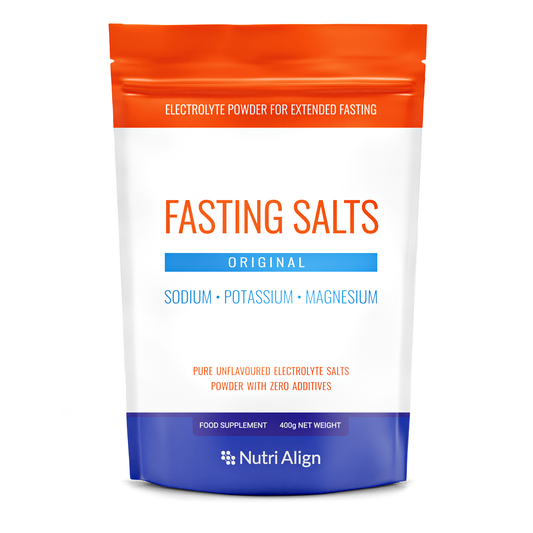
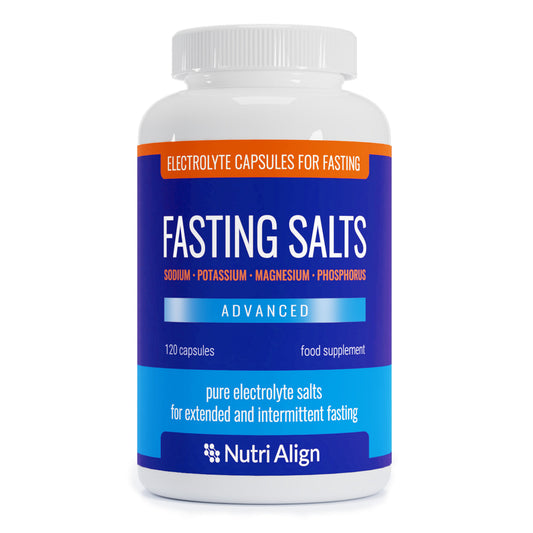
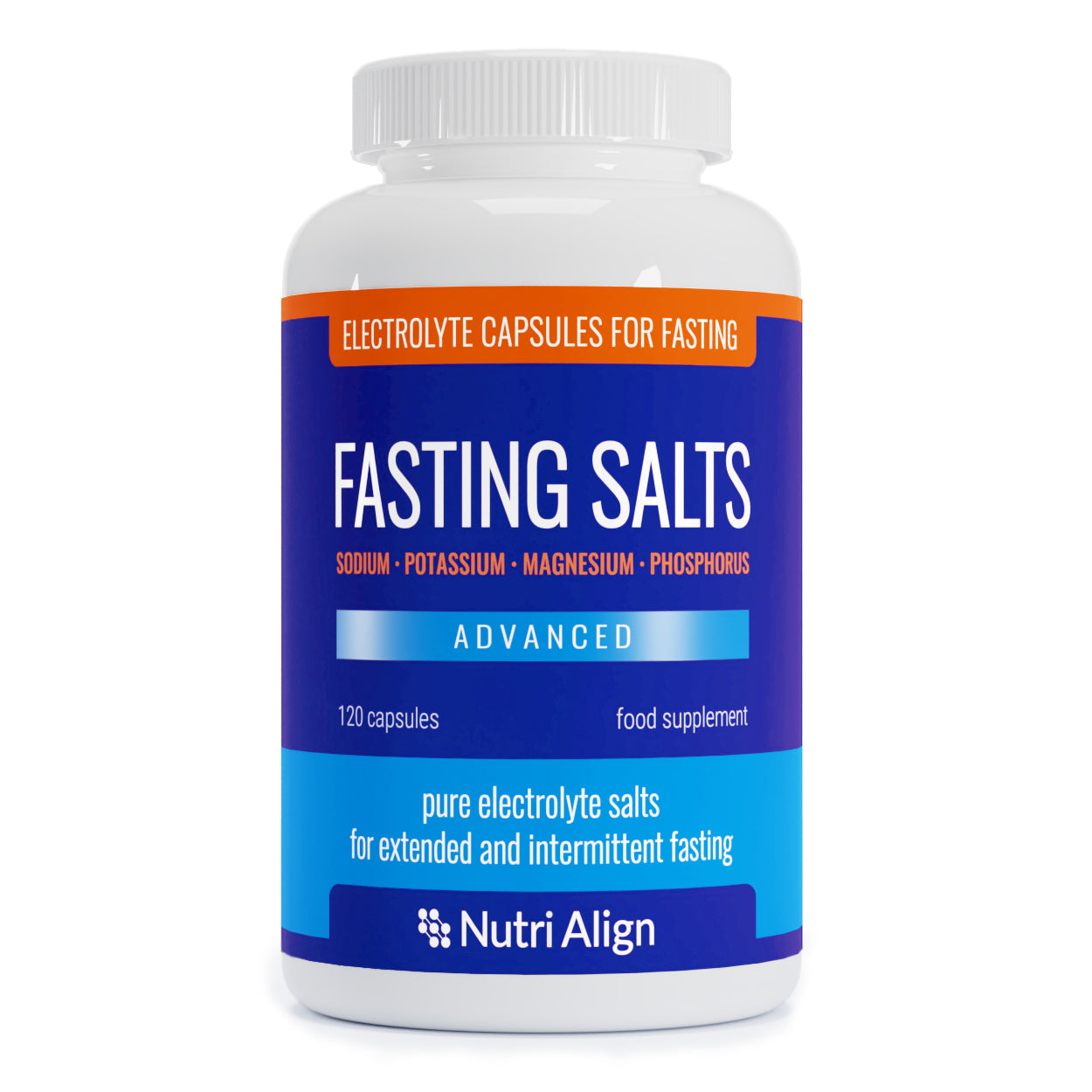
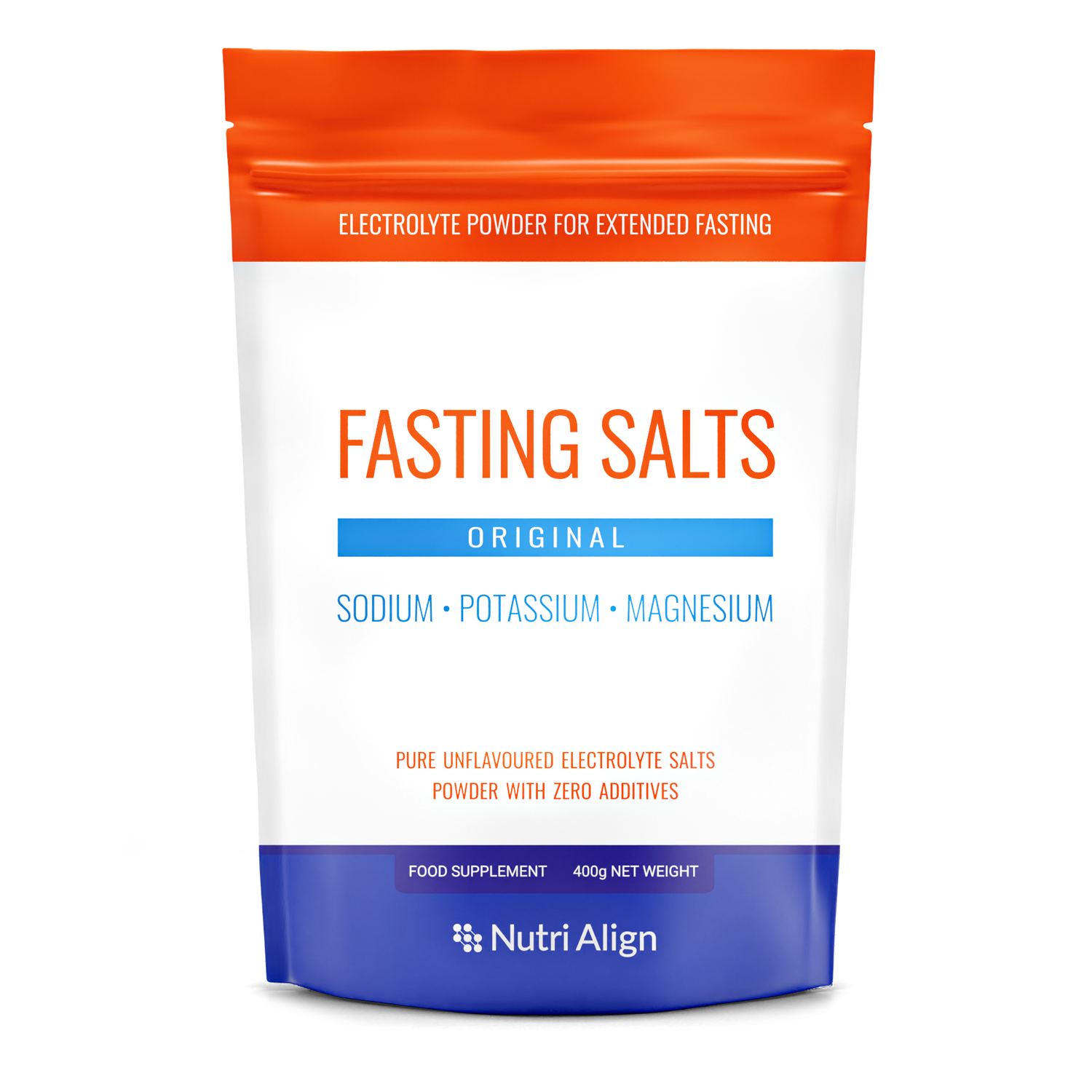
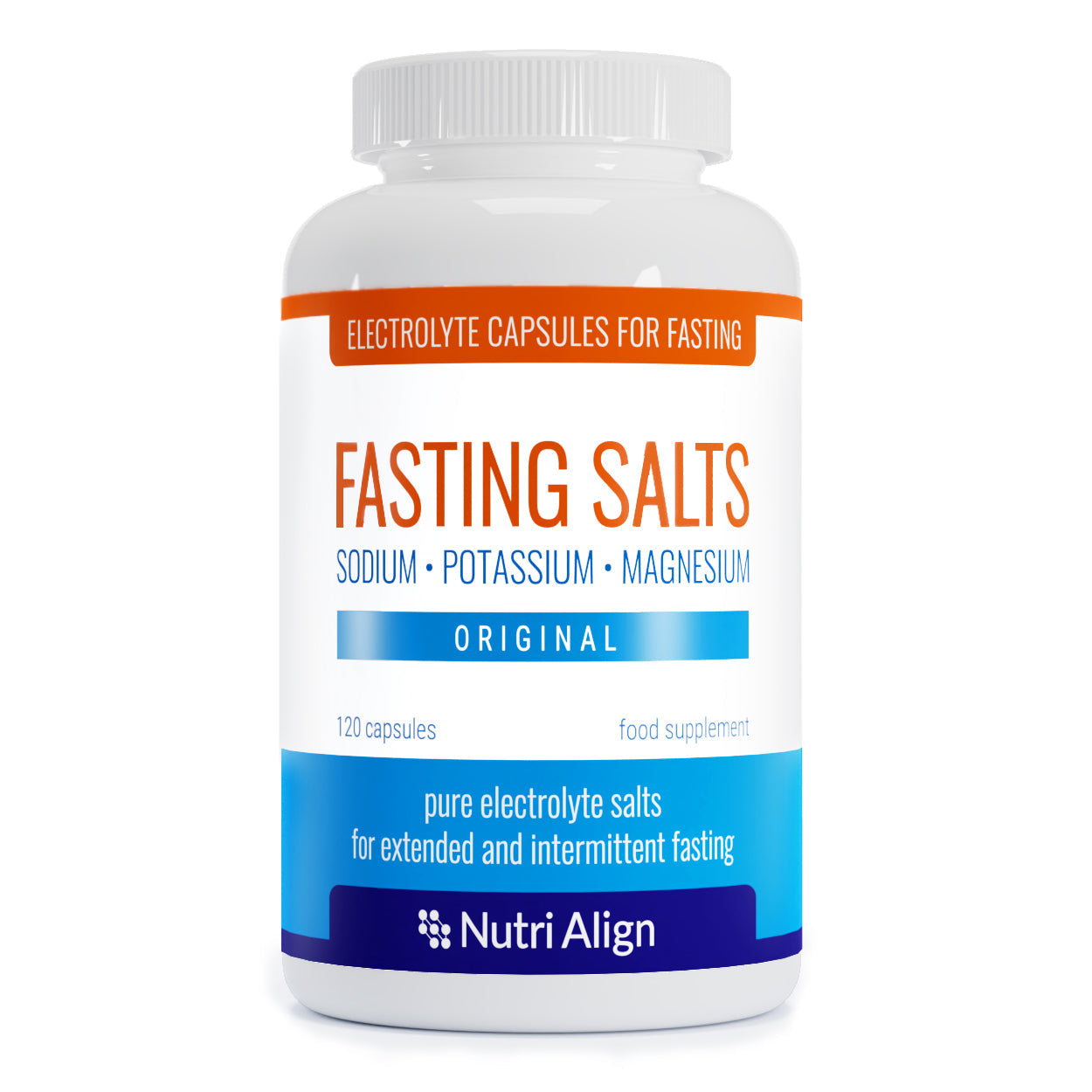
Our Fasting Salts give you everything you need in one clean formula, so you can skip the guesswork.
But we know a ready-made supplement is not in everyone's budget. If money is tight, making your own fasting electrolytes mix is a practical and affordable alternative.
The article below explains everything you need to know in detail - or you can just skip straight to the DIY Fasting Electrolytes recipe.
Which electrolytes do you need while fasting?
For fasting, the "Big Three" electrolytes do the heavy lifting:
Sodium is depleted rapidly during a fast, so it is the one most people run short on first and the most important one to start supplementing.
Potassium supports muscle and nerve function, and works closely with sodium
Magnesium helps with cramps, sleep and energy
There are three other electrolytes: chloride, calcium and phosphorus. But you don't need to worry about them as much. Chloride is typically bound with sodium, whereas calcium and phosphorus deplete at much slower rates. Phosphorus matters during the refeed phase on very long Extended Fasts.
Do your needs change with your type of fast?
Yes. Your fasting style makes a big difference.
Intermittent Fasting (IF) such as 16:8, 18:6 or OMAD: you still eat every day, so you get most minerals from food. Often a good pinch of quality salt in your water is enough. Some people add a little potassium and magnesium if they feel off.
Extended Fasting (EF) with no food for 24 hours or more: you get nothing from food, so you need to supply all three electrolytes yourself and in higher amounts.
Long Extended Fasting for 5 days or more: you will definitely need electrolyte supplements throughout including sodium, potassium and magnesium. Plan ahead for refeeding too. You will need phosphorus and B vitamins when you break your fast, as these support a safe return to eating.
Read more about supplement needs for each type of fasting
How much electrolytes do you need for fasting?
It's important to remember that there is no "one size fits all" answer. Requirements vary a lot from person to person.
Your fasting type, activity level, climate and how much you sweat all play a part. There is no single right number, but optimal fasting electrolytes usually fall in these daily ranges:
- Sodium: 5,000 to 7,000mg
- Potassium: 1,000 to 3,500mg
- Magnesium: 300 to 500mg
If you want a more precise recommendation, please use our Fasting Salts Dosage Calculator.
It was designed for Nutri-Align Fasting Salts products. But it can also help you estimate your requirements for fasting electrolytes if you are using a different product or making your own DIY blend.
How to make your own DIY fasting electrolytes blend
Once you figure out whether you need all Big Three electrolytes or just some of them, you will need to purchase mineral salts to use as the ingredients for your custom blend.
Sodium: this usually comes from sodium chloride which is basically any standard salt used for food. Pink Himalayan salt or Celtic sea salt can be used although they are not necessarily always better (see our article on Pink Himalayan salt). You can get these salts from any supermarket.
Potassium: potassium salts are also widely available, usually as an alternative salt for people who are trying to reduce sodium intake. Two popular well-known brands are NuSalt and NoSalt, both providing potassium chloride. Cream of Tartar is another source of potassium but you need more of it. Both of these types of products are available in supermarkets, major retailers and via Amazon.
Magnesium: the most popular forms of magnesium for fasting are either magnesium glycinate or magnesium citrate. These are usually not available as a food product. But you can easily get them as a single-ingredient supplement powder from pharmacies, health food shops or major retailers. Avoid magnesium oxide - it has a really poor absorption level.
Watch out for active electrolyte content in salts
Here's a really important point that trips up many people.
The active content of mineral salts is not the same as the total weight listed.
Sodium: Table salt, pink Himalayan salt and Celtic sea salt all typically contain about 40% sodium by weight. So 5g of salt gives roughly 2g of sodium.
Potassium: Potassium chloride (NuSalt, NoSalt) is about 52% potassium. Cream of Tartar is much weaker, at around 21% potassium. Potassium chloride powder is also available to buy on Amazon and from retailers as a standalone product. IMPORTANT - if buying the powder, ensure it's marked specifically as food grade. Non-food grade potassium chloride is also available on the market for other uses.
Magnesium: as this one will most likely be a supplement product, it should have the active percentage listed on the pack. Please note that it's fairly low, about 14% active content for magnesium glycinate and 16% for citrate.
When you buy ready-made supplements, the active content is always listed on the Supplement Facts panel. But when you buy mineral salts as raw ingredients, these are usually classified as foods rather than supplements and so may not include the full active ingredients breakdown.
So you will need to calculate the amount of raw ingredients you need based on your target dosages.
See a sample Fasting Electrolytes recipe that's similar to our Fasting Salts below.
Word of caution if buying online
You can often find really cheap products on online platforms like Amazon, Walmart and eBay.
Unfortunately, sometimes the low price indicates low levels of food safety standards, obscure country of origin and other red flags.
If you don't recognise the brand, or if the price looks too good to be true, please be extra vigilant and do some additional research on the seller before purchasing.
How to make fasting electrolyte blend
Once you have all of your ingredients calculated and measured, the next step is to blend them together.
Simply stirring the mix with a spoon is not enough!
Ideally, use a blender and blast the mix thoroughly so that everything is blended together evenly.
If you don't have a blender, use a jar or a protein shake bottle, and shake the powder vigorously for 30-60 seconds.
How to store your fasting electrolytes mix
If you make a big dry batch, keep it in an airtight container, ideally a glass one.
Electrolytes absorb moisture and can react to sunlight and heat. So keep your container in a cool dark place.
How to take fasting electrolytes
Mix your ingredients in plenty of water and sip through the day, rather than downing it all at once. A large dose in one go can upset your stomach.
It will taste salty. If the taste is too strong, just add more water. You can also try sparkling water, or a squeeze of lemon or a splash of apple cider vinegar.
Watch our video on how to take Fasting Salts, or read the blog article.
All these tips apply to both ready-made products such as ours, or your DIY mix.
Fasting electrolytes capsules
If you find the salty taste overwhelming, another option is to buy empty supplement capsules and fill them with your mix.
It takes more effort but is still cheaper than ready-made.
Capsules are usually made from gelatine or a vegan option HPMC. Gelatine contains a trace of protein calories, so strict fasters often prefer HPMC.
How to optimise your dosage
As mentioned above, use our Fasting Salts Dosage calculator to estimate your dosage.
Always begin at the lower end of the range and build up only if you need to.
This is gentler on your stomach and helps you find your own sweet spot without overshooting.
Too much at once, especially magnesium, can send you running to the toilet.
For Extended Fasting, start at the lower end on Day 1, and gradually build up.
Listen to how you feel
Your body will tell you when your fasting electrolytes are off.
Watch for:
- Headaches
- Muscle cramps
- Fatigue
- Dizziness
- Nausea
- A racing or pounding heartbeat
If any of these show up, top up your electrolytes and see if things improve within an hour or so. Adjust from there.
A quick safety note
Electrolytes are powerful, and potassium in particular can be risky in large amounts.
If you have kidney problems, heart problems, or take medication such as blood pressure tablets, check with your doctor before supplementing.
When in doubt, start low.
Fasting Electrolytes Recipe
The recipe is based on Nutri-Align Fasting Salts
Ingredients
- 300g sodium chloride (basically any table salt)
- 100g food-grade potassium chloride powder
- 40g magnesium citrate (or magnesium glycinate) powder
Read more on where to get these ingredients
Method
Mix the salts together in a blender, or shake vigorously in a jar for 30-60 seconds.
Quantities and servings
The total mix (440g) will provide 88 servings of 5g. 5g fits approximately into one level teaspoon.
Active ingredients
Each 5g serving provides:
- 1340mg sodium
- 596mg potassium
- 72mg magnesium
Dosage for fasting
Extended Fasting: Take 1-2 servings per day in the first few days, and up to 4-5 servings per the day for longer Extended Fasts
Intermittent Fasting, OMAD, ADF: Take 1-2 servings per day, depending on how you feel
Use our Fasting Salts Dosage Calculator for more precise recommendations
Tweaking the recipe
The recipe above is based on our Fasting Salts Powder formulation which is optimised for Extended Fasting.
You can tweak these quantities depending on your individual requirements. For example, if you are doing IF or OMAD, you can decrease the amount of sodium and prioritise magnesium or potassium instead.
Upfront costs
The recipe above provides 88 servings, which would last for approximately 20 days on long-term EF (4-5 servings per day), and 40-80 days on IF (1-2 servings per day). So it goes a long way.
But here's another point to consider. It's hard to find 40g of magnesium citrate or 100g of potassium chloride in such small quantities. Retail packs are typically larger.
So in practice, you probably will end up buying a larger pack, and have some of it leftover.
The upfront costs will therefore climb up, and could easily be at around £20 (roughly $25 in the USA). If you factor in the cost of your time and labour, you will find that the final cost is not that far off from ready-made products.
Do you want to know more about how profit margins work on ready-made electrolyte supplements?
Please check out our article: Are Ready-Made Fasting Salts a Rip-Off?
Final thought
The most important thing is that you get your electrolytes while fasting.
If your preference is to make your own, that's a perfectly valid choice and we are not going to try and talk you out of it.
Wishing you all happy and healthy fasting!